
Hi, everyone!
Today I’m starting a series on intellectual repertoire, character, and learning, with a bit of a dark academia vibe, but with one main purpose: to reflect on the future of humanity. I feel like we’re losing the essence of knowledge and the value we place on it, almost as if we were all one step away from becoming robots.
Pour yourself a little glass of wine and come think this through with me!
(I strongly suggest opening the app or reading this on a computer.)

The Study
Learn
1. The Sexy Brain
I don’t know if you’ve noticed it too, but over the past few years, an aesthetic of knowledge (books, studying, etc.) has started appearing with some frequency in the world of luxury. Miu Miu created its Literary Club, Dior turned book covers into handbag prints, Chanel created its own literary club, Valentino partnered with Belletrist, Kaia Gerber created Library Science, and Dua Lipa turned her love of books into an extension of her own brand.
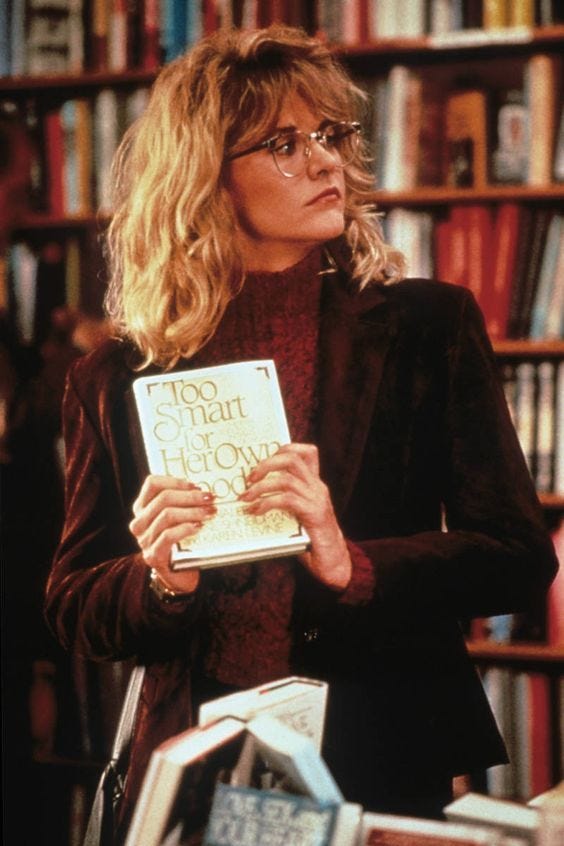
Social media embraced similar trends such as BookTok, dark academia, and the literary it-girl. Since I identify with this aesthetic because I have always been the nerd, that’s pretty much all over my Pinterest these days. There is even a relatively new profession dedicated to choosing the books that brands and celebrities are seen reading. Intelligence is sexy now (but I think it has always been, right?).
Why now, of all times? Why has knowledge, something that for a long time seemed distant from the world of luxury, started being treated as an object of desire? Luxury is access to what is rare. And although it has never been easier to find information, actually processing it requires dedication, attention, and a willingness to stay with an idea long enough to truly understand it. These resources are becoming increasingly scarce and, therefore, luxurious.
2. Information Is Abundant Today. Repertoire Is Not.
Having access to information does not actually mean knowing something. Knowing presupposes context, cultural background, and the ability to establish relationships and make connections between what we already know and what we are learning. That is precisely what differentiates repertoire from a collection of information. A person can spend the entire day consuming news, videos, podcasts, and articles and still not significantly expand their understanding of the world. Wisdom emerges when different kinds of knowledge begin to speak to one another.
In this sense, studying takes on a function that goes far beyond accumulating information. When seeking knowledge, it is essential that we develop CRITICAL THINKING. For that, we need to expand our repertoire beyond shallow or purely technical information.
The exact sciences teach us the practicalities of everyday life and help us build tools that can assist us as a civilization. The humanities help us understand the implications of these tools, the politics of our relationships as a society (yes, whether you like it or not, we are political animals, as Aristotle already said way back in Ancient Greece), and prevent us from losing sight of the reasons behind our technological progress.
Studying History, for example, allows us to recognize patterns and understand that events that seem unprecedented often have precedents. Philosophy, in turn, teaches us to ask questions about our existence, about why things are the way they are. Art develops perception, abstraction, and feeling.
Literature places us inside experiences that are not our own and allows us to perceive how the human condition can be experienced in such similar ways by people who are so different, sometimes even from entirely different eras. I would even go so far as to say that literature expands our capacity for empathy.
Repertoire means having more points of comparison, a broader view of the world. Someone who knows only one way of thinking can mistake it for reality itself, because there is no other perspective available from which to question it. Those who know different societies, historical periods, authors, and ideas begin to notice that what seemed natural may simply be a convention, and that what seemed inevitable could have been different. Studying allows us to develop the ability to question the world beyond our immediate surroundings, to see things from a systemic perspective, and that, my dear readers, is real intelligence. And it is VERY sexy.

This systemic view, built through expanding our repertoire, works almost like a mental map of the universe. The less we know, the more easily we take what is in front of us for granted, simply accepting that things are the way they are. We remain silent in the face of injustice because we lack the ability to assess it, we follow commands without even realizing it, and we can easily be manipulated into believing in a particular ideology, for example.
3. Studying Builds Character
As we accumulate different intellectual experiences, some certainties begin to lose their appearance of self-evidence, which is why exposing ourselves to knowledge can be so difficult for many people.It deconstructs deeply held views and axioms.
Through knowledge, we can discover that there are other ways of organizing a society, interpreting events, explaining behavior, and imagining the future. When you build a shell around yourself to protect your worldview, it can actually hurt, almost physically, to have to deconstruct a way of thinking.
Therefore, exposing ourselves to knowledge requires humility and a willingness to let our certainties collapse. Studying means admitting that we may be wrong, that there are things we do not know, and that other people may understand a particular subject better than we do.
The very meaning of the words helps build this idea. Repertorium means something that has been found, gathered, and kept. Kharaktēr is the mark that has been engraved. What we find and retain throughout our education becomes part of the material with which we judge the world, and the choices we make repeatedly leave their own marks on us.

For Thomas Aquinas (without any religious interpretation here, only a philosophical one), prudence is the virtue from which all the others proceed. It is reason applied to action and therefore depends on some very concrete dispositions:
memory, to learn from what has already happened
docility, to learn from those who know
foresight, to consider what may happen and pay attention to circumstances before acting.
Therefore, knowledge of reality is what guides our judgment in action: prudence. I would go so far as to say that our repertoire shapes our character. It is the lens through which we see reality. The current contradiction and intellectual crisis we are experiencing as a society are deeply connected to a lack of knowledge and a lack of humility to allow ourselves to be exposed to it. Today, many people find it more convenient to believe what they consider convenient rather than what is true.
There is also something deeply comfortable about not having to think too much. Knowledge can be uncomfortable precisely because it forces us to question what we already believe, tolerate uncertainty, and admit that we may be wrong.
H. G. Wells explored a version of this problem in The Time Machine. In the future he imagined, humanity had divided into two species: the Eloi, who live on the surface in apparent comfort and leisure, and the Morlocks, who live underground and sustain the system on which the Eloi depend. Wells was writing about class, evolution, and social inequality, but there is something unsettling about the image of a civilization becoming less capable precisely because it no longer needs to exercise certain capacities. The Eloi became physically and intellectually diminished because they no longer needed to understand the conditions that sustained their own existence.
Aldous Huxley took this idea in another direction in Brave New World. His dystopia is not built primarily through the suppression of knowledge, but through the elimination of the desire for depth by means of constant entertainment, pleasure, and distraction (seems familiar, don’t you think?). No one needs to force people not to think when they are given enough things to keep them occupied and make them stop wanting to think.
4. When the Expert Becomes Inconvenient
Something I notice a lot these days is the conviction that our opinion should carry the same weight as anyone else’s, regardless of knowledge or experience. It is the inversion of Thomas Aquinas’s docility: instead of recognizing that someone who has spent twenty years studying a particular subject probably knows more about it than we do, we start treating expertise as a form of arrogance. The expert becomes inconvenient precisely when their conclusion contradicts what we would like to be true.
Isaac Asimov called this the “cult of ignorance.” The problem is not that ordinary people have opinions, but that opinion is treated as equivalent to knowledge. The phrase “my opinion is worth as much as yours” sounds democratic, but it stops making sense when we are talking about subjects that require years of study to understand. An opinion remains an opinion, even when expressed with conviction, while knowledge presupposes some commitment to what can be demonstrated, verified, or learned.
If we reject information simply because it is inconvenient, we are not exercising critical thinking. We are using our intelligence to protect a conclusion we have already chosen. Internally, the person is asking themselves, “what do I need to believe in order to keep thinking the way I already think?” At that point, even knowledge can be placed in the service of self-deception.

5. Social Media Profits From the Opposite of Repertoire
It is difficult to talk about this disposition without talking about social media, because they have created an economic environment based precisely on capturing our attention. In The Chaos Machine, Max Fisher shows how the platforms’ business model favors whatever keeps people engaged, and outrage, fear, conflict, and identification are particularly effective at doing so. Simple ideas increase engagement, and false news can spread faster and reach more people than true news simply because of the way it is constructed and distributed. The algorithm does not need to know whether something is true. It only needs it to be irresistible.
Social media are machines for creating echo chambers, environments in which our opinions are continuously reaffirmed by people and content that share the same convictions. Algorithms reinforce this dynamic by recommending posts similar to those we have already interacted with, reducing our exposure to opposing perspectives.
When an idea is repeated without being challenged, it can acquire the appearance of obvious truth, and disagreement begins to look like a sign of ignorance or bad faith. Gradually, we lose the habit of examining our own arguments, precisely one of the abilities that repertoire should help us develop, and the world becomes increasingly polarized.
The social media environment is fundamentally at odds with intellectual development. One piece of information arrives, triggers a reaction, and is immediately replaced by another.
Attention is fragmented into small doses, while the next novelty is always just one movement away, leaving no time to reflect on the subjects themselves. Artificial intelligence may represent a new stage in this process because now we are not only outsourcing the search for and organization of information, but also part of the intellectual work we previously had to do ourselves. This does not necessarily make the tool bad, but it is important to know what we are handing over to it.

The issue is that both social media and AI can make us feel informed without requiring us to develop our own understanding. We can consume endless explanations, have our opinions reinforced, and receive polished answers to questions we have barely had time to think through. Repertoire, however, takes time to build. It requires us to encounter ideas that challenge us, make connections across different fields, and develop our own judgment. If we gradually surrender these processes in exchange for convenience, we risk becoming increasingly dependent on tools that can provide answers while leaving us less capable of evaluating them.
Repertoire is sexy, but its implications go far beyond aesthetics. In a world where information circulates at an ever-increasing speed and can be used to manipulate us, cultivating knowledge and critical thinking becomes increasingly necessary. We need to learn to question what we receive, recognize the limits of what we know, and have the humility to reconsider our own convictions. This is what allows us to seek coherence instead of simply defending our positions, build cooperation instead of feeding polarization, and recognize in others someone we can learn from rather than an adversary to defeat.
If repertoire helps us understand the world better, we also need to make it more accessible and allow it to circulate. After all, what is the point of cultivating knowledge if we do not put it at the service of a society that is better able to think, engage in dialogue, and act together?
--
In the next Newsletter, we’ll continue exploring this subject! I’ll see you next week.

The Staircase
Aplly
5 Ways to Sharpen Your Critical Thinking
1. Follow the source, not just the claim.
When you come across a striking headline or a claim that provokes a strong reaction, look for the original source. Check who produced the information, what evidence supports it, and whether the headline accurately represents what the source says.
2. Read beyond your usual perspective.
Choose a serious author whose conclusions differ from yours and try to understand their reasoning before deciding whether you agree. The goal is to engage with an argument in its strongest form, rather than looking for the easiest version to dismiss.
3. Learn to recognize what you don’t know.
Before forming an opinion on a subject, identify what you understand, what you’re assuming, and what you would need to learn to make a sound judgment. Being able to distinguish knowledge from intuition is an intellectual skill in itself.
4. Practice changing your mind.
When new evidence contradicts something you believe, resist the urge to dismiss it immediately. Ask yourself what kind of evidence would convince you that you were wrong. If the answer is that nothing could, you may be defending an identity rather than evaluating an idea.
5. Replace the need to win with the desire to understand.
In a disagreement, try to establish what you actually agree on, where your interpretations diverge, and what evidence could help you resolve the difference. The purpose of a discussion is not always to reach consensus, but it should leave room for both people to learn something.


Curation
Discover
Read
The Time Machine by H. G. Wells: Wells uses time travel to explore class, evolution, and social inequality. The Eloi and Morlocks offer a particularly interesting reflection on what happens when a civilization stops exercising the capacities it no longer needs.
Brave New World by Aldous Huxley: A dystopia built not through the suppression of knowledge, but through constant pleasure, entertainment, and distraction. Huxley explores what happens when people no longer need to be forced into ignorance because they have stopped wanting depth.
The Chaos Machine by Max Fisher: An investigation into how social media platforms are designed to capture attention and how outrage, fear, polarization, and extreme content can become powerful drivers of engagement.
The Four Cardinal Virtues by Josef Pieper: A philosophical exploration of prudence, justice, fortitude, and temperance. Pieper was a Catholic philosopher, so the book is rooted in the Catholic intellectual tradition, but it can be read from a philosophical perspective by anyone, regardless of their religious background.
Listen
TED Talks Daily — “What to do when your beliefs are challenged” with Tenelle Porter: A conversation about intellectual humility, the possibility that we may be wrong, and what happens when we encounter information that challenges our existing beliefs.
Conversations on Intellectual Humility — “What is Intellectual Humility?”: An introduction to intellectual humility and why recognizing the limits of our own knowledge can change the way we approach disagreement, learning, and conflict.
Watch
The Matrix: A classic meditation on perception, reality, and the discomfort of discovering that the world we take for granted may not be what it seems. It fits particularly well with the idea that repertoire gives us alternative perspectives from which to question our own reality.
Dead Poets Society: A film about education, intellectual curiosity, and the transformative power of learning. It is also a beautiful reminder that education is not simply about accumulating information, but about developing the courage to think for yourself.
Ezra Klein with Malcolm Gladwell: Why We’re Polarized: A conversation about political polarization, identity, and why American politics became increasingly divided along ideological and demographic lines.

Letters
Read my Blog
About intelectual humility and the future
Hi, everyone! Wow, this week was so busy and I barely had time to put the newsletter together again, but I’m here! I really wanted to write about this topic because it has been bothering me a lot lately.
Humility in recognizing what you don’t know is sometimes important. But being genuinely willing to study and learn is a whole other level, and I see that many people are not prepared for that. Not here on Substack, but out there, you know?
As a society, we need to start questioning this immediately, especially when we think about the future of our children. I see how polarized the world has become, how ultraconservative ideas are gaining more and more space, and it honestly scares me quite a lot.
I truly believe that the solution to our problems is intrinsically connected to acquiring knowledge, cultivating intellectual humility, and preserving our critical thinking skills. So, I think the next few texts will continue in this direction until we have exhausted the subject. This one was quite academic, but next week I think we can make it a little lighter. We’ll see!
Thank you once again for reading what my little brain comes up with.

Have a wonderful week!
— The Gilded Notebook